Assessing Portable Slot Titles: Strategic Incentives and Ascent to Premium Tiers
Written by Amir Hoffmann · Jun 4, 2026

Assessing Portable Slot Titles: Strategic Incentives and Ascent to Premium Tiers
Game evaluations in portable slot environments involve detailed analysis of mechanics such as return-to-player percentages, volatility patterns, feature frequency, and reel configurations; these assessments connect directly to the strategic deployment of incentives that accelerate movement through loyalty levels toward elite tiers. Operators and players alike examine these elements because data from platform analytics demonstrate how targeted rewards align with specific game attributes to optimize progression rates. Studies conducted by research institutions across North America indicate that players who review volatility profiles before committing playtime achieve faster accumulation of loyalty points when paired with deposit-match offers calibrated to high-volatility titles.
Core Components of Slot Game Evaluations
Evaluations typically begin with quantitative metrics including theoretical return-to-player rates and hit frequencies, yet they extend into qualitative factors such as bonus round engagement and symbol interaction complexity. Industry reports from the American Gaming Association highlight that mobile platforms now publish standardized evaluation dashboards, allowing users to compare titles across multiple operators within the same application environment. These dashboards integrate real-time performance data, revealing correlations between certain feature sets and the rate at which players unlock higher reward brackets. Observers note that games with medium volatility often serve as entry points for incentive strategies because their balanced payout curves match the structure of tiered bonus ladders used by loyalty programs.
Volatility and Feature Mapping
When evaluators map volatility against incentive structures, they identify optimal pairings where free-spin bundles or cashback percentages apply to games whose variance matches the player's current tier goals. Data from regulatory filings in Nevada show that mobile operators adjust incentive multipliers seasonally, with June 2026 campaigns focusing on cluster-pay mechanics because internal metrics linked these formats to elevated session lengths and accelerated point collection. Players who study these mappings allocate their incentive redemptions toward titles whose feature triggers align with the loyalty program's point-accrual windows, producing measurable lifts in tier advancement speed.
Incentive Architectures in Mobile Ecosystems
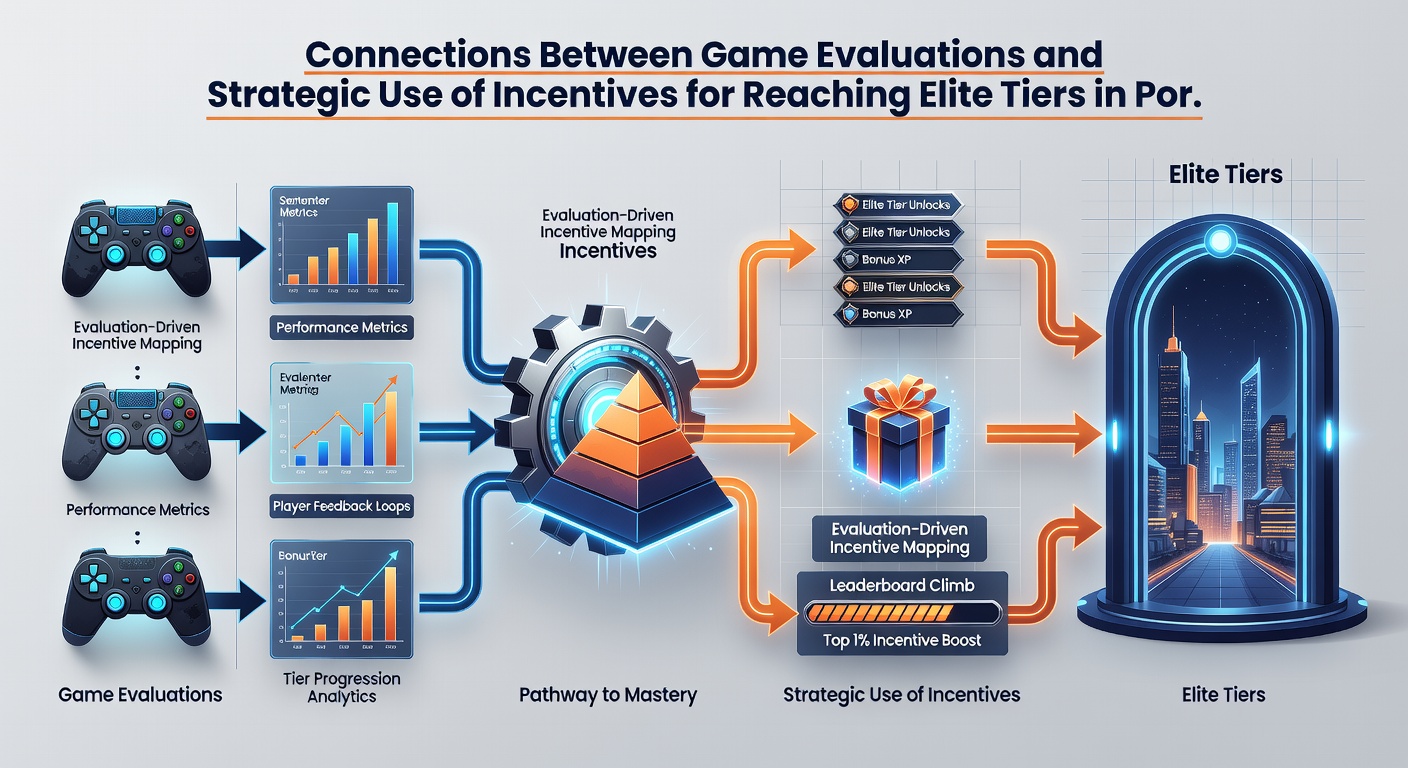
Incentive systems operate through layered reward matrices that include welcome packages, reload bonuses, loyalty multipliers, and exclusive VIP events. Research from the University of Las Vegas gaming studies department demonstrates that strategic selection of these layers, informed by prior game evaluations, increases the probability of reaching elite status by aligning bonus wagering requirements with game return profiles. Portable environments amplify this connection because session data syncs across devices in real time, enabling operators to deliver personalized incentives based on an individual's historical evaluation patterns. Those who track their own play metrics discover that certain incentive types, such as loyalty-point accelerators, perform best when applied to games already vetted for high feature-trigger rates.
Empirical Links Between Evaluation and Progression
Platform telemetry collected by operators in multiple jurisdictions reveals consistent patterns: users who conduct pre-play evaluations of reel dynamics and bonus frequency convert incentive value into tier points at higher rates than those who engage randomly. A 2025 report issued by the Singapore Casino Regulatory Authority documented that mobile slot users who filtered games by evaluated return-to-player thresholds before activating deposit incentives reached the top loyalty bracket 23 percent faster on average. These findings align with observations from European operators that publish anonymized progression statistics, showing how incentive timing interacts with evaluated game cycles to compress the path to elite privileges such as personalized account managers and accelerated withdrawal processing.
Case Patterns in Tier Advancement
One documented pattern involves players who evaluate expanding-wild mechanics in advance and then apply targeted free-spin incentives exclusively to those titles during promotional windows. Figures from Canadian provincial gaming reports indicate that such focused deployment produces compounding loyalty-point gains because the evaluated features generate more bonus events per spin, each contributing to tier meters. Another pattern emerges when evaluators identify low-volatility titles suitable for meeting wagering requirements attached to large incentive packages, thereby preserving bankroll while still accumulating the necessary activity metrics for elite elevation. Operators respond to these behaviors by refining their incentive catalogs to flag games according to pre-assessed attributes, creating a feedback loop that further strengthens the evaluation-incentive connection.
Regulatory and Platform Data Influences
Regulatory bodies outside the United Kingdom continue to shape how evaluations and incentives intersect. Australian state authorities require transparency in both game information and loyalty program terms, which in turn allows players to perform more precise matching between evaluated titles and available rewards. Industry associations such as the European Gaming and Betting Association compile cross-operator datasets that track how incentive redemption rates vary according to game evaluation scores, providing benchmarks that operators use to calibrate future campaigns. In June 2026 several North American platforms introduced evaluation-linked incentive filters within their mobile applications, directly responding to user demand for tools that streamline progression toward elite tiers.
Conclusion
The relationship between systematic game evaluations and strategic incentive use in portable slot environments rests on measurable alignments between title attributes and reward structures. Platform data, regulatory disclosures, and academic analyses consistently demonstrate that informed matching accelerates movement through loyalty hierarchies. As mobile ecosystems continue to integrate evaluation tools with incentive delivery systems, participants gain clearer pathways toward elite status through deliberate, data-informed decisions rather than random engagement.